
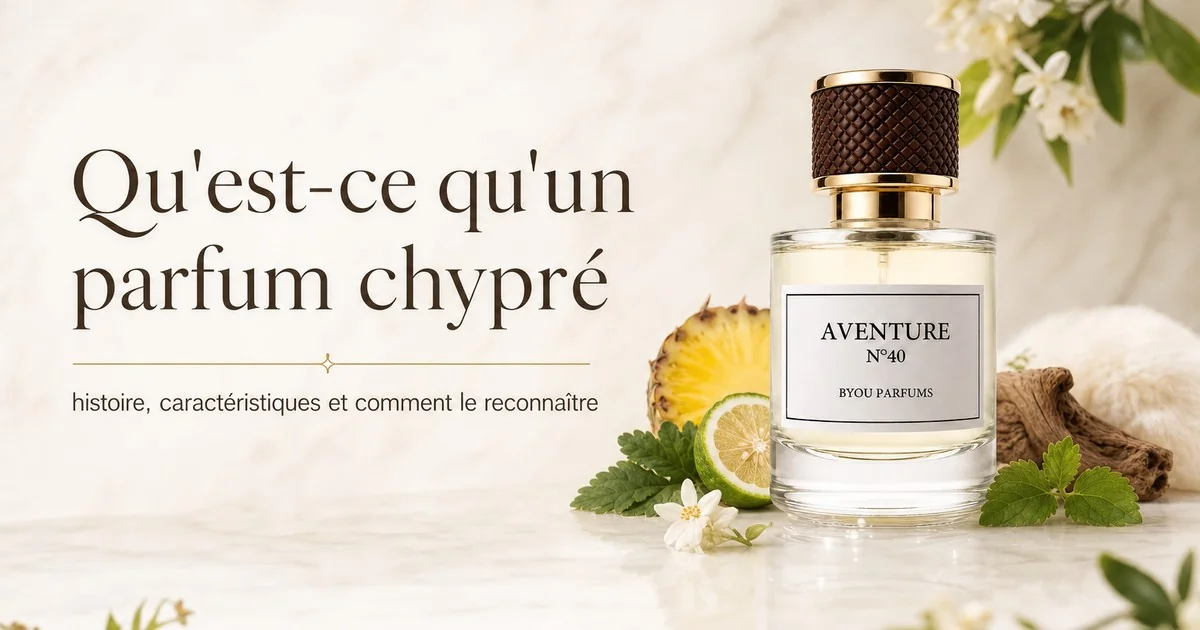
A chypre perfume is defined by a sophisticated, timeless olfactory accord built on three pillars: citrus top notes (bergamot, citrus fruits), a floral or aromatic heart, and a woody-mossy base dominated by oakmoss, patchouli and earthy notes. Born in 1917 with François Coty's legendary “Chypre”, this style takes its name from the island of Cyprus and embodies Mediterranean elegance, depth and character.
This olfactory family is one of the noblest in perfumery. It appeals through its balance between freshness and warmth, between lightness and depth. Today, chypre comes in modern versions that keep this unique signature while adapting to contemporary tastes.
Where does chypre perfume come from? A journey through perfume history
The history of chypre perfume begins in 1917, when François Coty revolutionised perfumery with his creation “Chypre”. This iconic fragrance established the codes of an entire olfactory family and set a new standard of sophistication.
The name “chypre” refers to the island of Cyprus (Chypre in French), the Mediterranean cradle where the emblematic ingredients of this composition grew: labdanum rockrose, citrus fruits and aromatic herbs. Coty drew on this botanical wealth to create a revolutionary accord.
“Chypre embodies the very essence of the Mediterranean: sun, warm earth, fragrant vegetation and a distant sea.”
Over the 20th century, chypre became the signature of many great perfumes. Mitsouko by Guerlain (1919), Miss Dior (1947), Aromatics Elixir (1971): so many legendary creations exploring the many facets of this family. Chypre has passed through the decades without losing its aura of timeless elegance.
Good to know
The real turning point came in the 2000s, when European restrictions on natural oakmoss pushed perfumers to reinvent chypre with synthetic materials and alternative accords, giving rise to “modern chypres”.
What are the characteristics of a chypre perfume?
A chypre perfume is recognisable by its distinctive pyramid structure and its unique balance between freshness and depth. This olfactory architecture rests on precise accords that create an instantly identifiable signature.
The olfactory pyramid of a classic chypre
Top notes: A chypre opens with a burst of citrus freshness. Bergamot usually dominates, accompanied by lemon, grapefruit or mandarin. This bright, sparkling opening contrasts with the depth that follows.
Heart notes: The heart reveals floral facets (rose, jasmine, iris) or aromatic ones (lavender, sage). Some chypres include fruity (peach, plum) or spicy notes. This is where the perfumer expresses their creativity while maintaining balance.
Base notes: The foundation of a chypre rests on oakmoss (or its modern substitutes), patchouli, labdanum, vetiver and dry woods. This earthy, slightly animalic and woody base gives chypre its unmistakable signature.
The accords that define chypre
- Hot-cold contrast: the freshness of citrus versus the warmth of woods and mosses
- Sophisticated sillage: neither too discreet nor too overpowering, chypre asserts an elegant presence
- Marked evolution: a clear transformation from the sparkling top notes to the deep base
- Earthy character: this mineral, forest-like dimension sets chypre apart from other families
- Timelessness: neither too modern nor old-fashioned, chypre outlasts trends
Aventure N°40 — Chypre illustrates this architecture perfectly with its 35% perfume essence, a concentration that lets each facet express itself fully on the skin.
How do you recognise a chypre perfume in a perfume shop?
Identifying a chypre takes a little nose training, but certain clues never lie. Here's how to sharpen your nose to spot this iconic family.
The tell-tale olfactory signs
The citrus-moss opening: If the perfume starts on a citrus note that quickly gives way to an earthy, almost forest-like sensation, you're probably dealing with a chypre. This rapid transition is characteristic.
The presence of patchouli: This key ingredient brings a woody-earthy, slightly camphoraceous note. In a chypre, patchouli is never alone: it blends into a complex accord with other woods and mosses.
The “dry” and “green” feel: Unlike gourmand orientals or powdery florals, chypre evokes the dry Mediterranean landscape, undergrowth and crushed leaves. It is neither sweet nor creamy.
Recognition tip
Close your eyes and imagine: if the perfume evokes a walk in the forest after the rain, with damp moss, bark and a last trace of sunlight in the leaves, it's probably a chypre.
Comparison table: chypre vs other olfactory families
| Olfactory family | Main characteristic | Difference from chypre |
|---|---|---|
| Chypre | Bergamot-moss-patchouli accord, earthy and sophisticated | — |
| Woody | Dominated by cedar, sandalwood and vetiver, without the citrus freshness | More linear, less top-to-base contrast |
| Oriental | Spicy warmth, vanilla, amber, often gourmand | Sweeter, less earthy, no moss |
| Citrus | Citrus fruits dominant from start to finish, fresh and light | Lacks the woody-mossy depth of the base |
| Leather | Animalic, smoky and tobacco notes, a tanned quality | Rawer, less plant-like than chypre |
To explore other olfactory worlds, the BYOU COSMETIQUES Niche Perfumes collection offers several alternatives: Silver Wood N°20 — Woody for a more linear, woody approach, or Pure Herb N°24 — Citrus to stay with citrus freshness without the earthy depth.
What are the modern variations of chypre?
Classic chypre has evolved into several sub-families, each bringing a contemporary touch to the original structure.
Fruity chypre
This version softens the severity of classic chypre with notes of peach, blackcurrant, apple or red berries. The result remains sophisticated but becomes more approachable and rounder. Ideal as a first introduction to chypre.
Floral chypre
Here, the floral heart takes centre stage. Rose, jasmine, ylang-ylang or peony bloom generously while keeping the characteristic woody-mossy base. This variation particularly appeals to lovers of elegant, refined perfumes.
Aromatic chypre
A more masculine and energetic version, aromatic chypre incorporates lavender, rosemary, thyme or sage. These Mediterranean herbs reinforce the perfume's natural character and freshness. It is often the preferred choice for men's chypre fragrances.
Leather chypre
A bold fusion of two noble families, this variant adds facets of leather, tobacco or birch to the chypre base. The result is powerful, assertive, sometimes provocative. For lovers of perfumes with character, Leather Shadow N°23 — Leather explores this path with intensity.
- 35%essence concentration in Aventure N°40
- 50 mllong-lasting elixir size
- 65%organic alcohol as a neutral base
How should you wear and apply a chypre perfume?
Chypre calls for thoughtful application to reveal its full complexity. Its sophisticated structure deserves a little extra care.
Strategic pulse points
Spray your chypre perfume from about fifteen centimetres away onto your wrists, the base of your neck and behind your ears. These areas give off heat that gradually diffuses the notes. Avoid rubbing your wrists together: this breaks down the molecules and alters the olfactory pyramid.
The ideal time for chypre
Chypre perfume shines particularly in autumn and winter, when its woody depth echoes the season. But its citrus freshness also makes it wearable in spring. It is a perfume with character, ideal for occasions that call for elegance and presence: evenings out, business meetings, events.
Key point
For maximum longevity, apply your chypre to clean, well-moisturised skin. Moisture holds the scent molecules and prolongs the perfume's diffusion throughout the day.
Optimal storage
Keep your bottle away from direct light and temperature changes. Heat and UV rays degrade the essences, especially the delicate citrus notes that open a chypre. A cupboard in a room at a moderate temperature is the ideal spot.
Why choose a chypre over another type of perfume?
Chypre perfume suits a particular personality: someone who seeks elegance without ostentation, depth without heaviness, character without aggression.
For lovers of sophistication: Chypre embodies a form of understated luxury. It doesn't shout, it whispers. Its complexity reveals itself gradually, rewarding those who take the time to get to know it.
For those who shun trends: While gourmand, sweet perfumes dominate the market, chypre remains true to a century-old olfactory tradition. Wearing a chypre is a way of asserting your independence from fleeting fashions.
For elegant versatility: A good chypre can be worn at the office as well as in the evening, in town as well as in the countryside. Its balanced structure adapts to any context without ever seeming out of place.
“Chypre doesn't just smell good: it tells a story, that of the eternal Mediterranean and classic perfumery.”
If you're looking to explore other sophisticated olfactory territories, also consider woody orientals such as Desert Bloom N°21 — Woody Oriental or Nomadic Shade N°25 — Woody Oriental, which share chypre's quest for depth and character. For a warmer approach, Rosy Vanilla N°22 — Amber Oriental offers a gourmand alternative while remaining refined.
FAQ: everything you need to know about chypre perfume
Is a chypre perfume suitable for both women and men?
Absolutely. Chypre has historically been a unisex family. While some variations (fruity-floral chypre) lean feminine and others (aromatic chypre) lean masculine, the basic structure remains unisex. Aventure N°40, for example, is defined as a men's perfume, but its sophistication also appeals to women who love perfumes with character.
How long does a chypre perfume last on the skin?
Thanks to its base notes rich in woods and mosses, a well-formulated chypre generally lasts between 6 and 10 hours. High-concentration versions, such as the elixir with 35% essence, offer even greater longevity, often up to 12 hours with a moderate but constant sillage.
Is chypre a seasonal perfume or can you wear it all year round?
Classic chypre comes into its own in autumn and winter, when its depth echoes the cooler temperatures. However, its citrus freshness at the top makes it wearable in spring and even on summer evenings. Simply avoid very hot days, when its richness could feel too heavy.
What is the difference between a chypre and a woody perfume?
A woody perfume focuses on notes of cedar, sandalwood and vetiver with a linear evolution. A chypre, on the other hand, plays on the contrast between citrus freshness and a woody-mossy base, with an earthy dimension and a pronounced pyramid structure. Woody scents are often drier and more direct, chypres more complex and contrasting.
How can I tell if a chypre suits me before buying it?
Test it on your skin (not on a blotter) and let it develop for at least 2 hours. A chypre changes considerably: if you only like the top notes, wait for the base. If you enjoy this evolution, love the earthy-woody side and are looking for a perfume with character rather than a comfort scent, chypre is made for you.
