
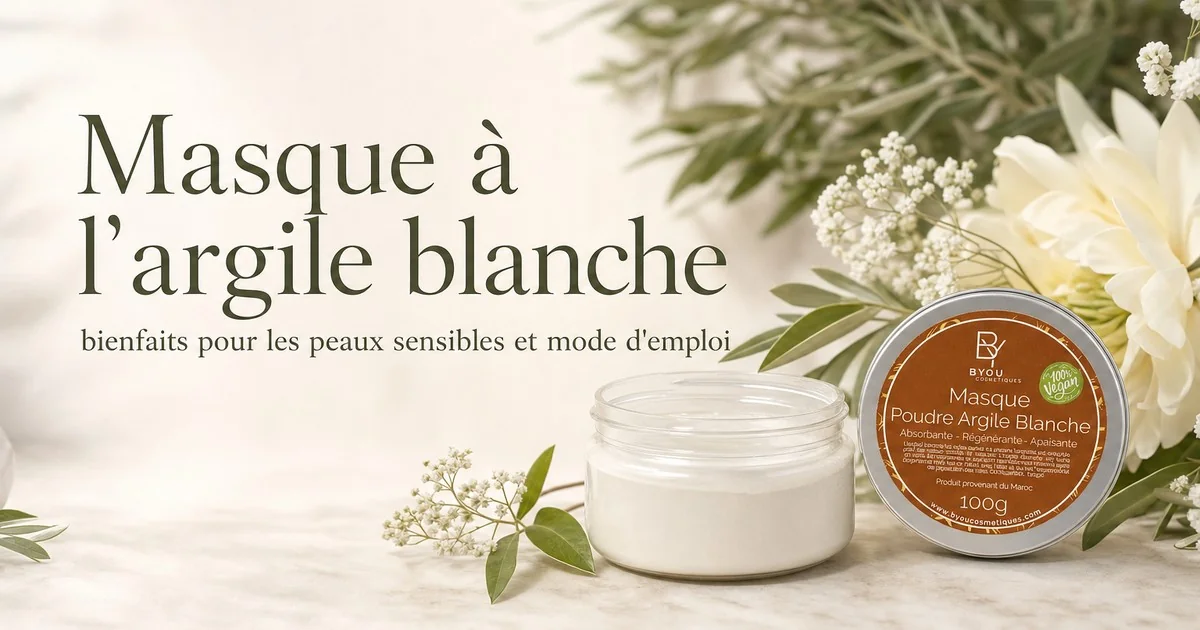
A white clay mask, also known as kaolin, is the perfect ally for sensitive and reactive skin. This ultra-gentle, 100% natural clay from Morocco purifies softly without irritating, soothes redness and reveals your skin's natural radiance. Unlike the more absorbent green or red clays, white clay respects the fragile balance of delicate skin while still giving it a deep cleanse.
Looking for a natural face mask that cares for your skin without drying it out? White clay is your new best friend.
What is white clay and why is it so gentle?
White clay, or kaolin, is a sedimentary rock made up mainly of aluminium silicate. It takes its name from the Kao-Ling hill in China, where it was discovered.
What makes it special? An ultra-fine mineral structure that makes it exceptionally soft to the touch and kind to fragile skin. Less absorbent than its green or pink cousins, it cleanses without stripping.
White clay is the most neutral and delicate of all cosmetic clays: it is even suitable for babies' skin.
The BYOU COSMETIQUES White Clay Powder Mask is made from 100% pure kaolin, extracted in Morocco using traditional methods. No additives, no preservatives: just pure, time-honoured minerals.
What are the benefits of a white clay mask for sensitive skin?
Gentle purification
White clay absorbs impurities, excess sebum and toxins without irritating the skin. It works gradually and gently, making it ideal for skin that can't tolerate harsh cleansing.
It gently unclogs pores, helps prevent blackheads and refines skin texture without causing redness.
An instant soothing effect
Rich in soothing minerals, white clay calms irritation, diffuse redness and feelings of discomfort. It is particularly recommended after sun exposure or when skin is feeling reactive.
Its pH, close to that of the skin, helps restore the skin's natural balance, which is often disrupted in sensitive skin.
Tip for reactive skin
Mix your white clay with rose water instead of plain water: you'll double the soothing effect and add a welcome touch of hydration.
A radiant, even complexion
White clay has natural brightening properties that help even out skin tone and fade light pigmentation marks. It stimulates microcirculation and helps oxygenate the cells.
The result: a fresh, luminous, rested-looking complexion from the very first application.
- 100%pure Moroccan kaolin
- 10-15 minis all it takes
- 1-2 timesa week recommended
How to use a white clay mask: step-by-step guide
Preparing the mask
In a glass or ceramic bowl (never metal, which can alter the clay's properties), add one tablespoon of white clay powder.
Gradually add lukewarm water, stirring with a wooden or plastic spatula until you get a creamy paste that is neither too runny nor too thick. The ideal texture: like a smooth, creamy yoghurt.
Applying it to your face
On perfectly clean, dry skin, apply a generous, even layer of the mask, avoiding the delicate eye and lip areas.
Go for a thick layer: the clay should never dry completely on the skin, especially if your skin is sensitive. If you feel it starting to tighten, spritz on a little thermal spring water.
The ideal leave-on time
Leave on for 10 to 15 minutes maximum. For very sensitive skin, start with 5 to 7 minutes for the first few uses.
Contrary to popular belief, a clay mask doesn't need to dry completely to work. Quite the opposite: keeping it slightly moist preserves the skin's hydrolipidic film.
Good to know
If your skin feels tight while the mask is on, it has either been left on too long or the layer was too thin. Remember to mist it regularly with a facial spray.
Rinsing and post-mask care
Rinse thoroughly with lukewarm water using light circular movements for a gentle micro-exfoliation. Finish with a splash of cool water to tighten pores.
Gently pat dry (without rubbing) and immediately apply your usual moisturiser or a plant oil suited to sensitive skin.
White clay vs other clays: what's the difference for your skin?
| Type of clay | Absorbency | Skin type | Main action |
|---|---|---|---|
| White clay (kaolin) | Low to moderate | Sensitive, dry, reactive | Soothes, gently purifies, brightens |
| Green clay | High | Oily, combination, acne-prone | Regulates sebum, detoxifies, mattifies |
| Pink clay | Moderate | Normal, combination, delicate | Balances, tones, softens |
| Red clay | Moderate | Dull, tired, mature | Restores radiance, improves circulation |
Got combination skin? Alternate cleverly: Green Clay Powder Mask on the T-zone (forehead, nose, chin) and white clay on the more sensitive cheeks.
What are the best ingredients to mix with white clay?
For extra hydration
Mix your white clay with rose water, chamomile floral water or aloe vera gel. These ingredients add an extra hydrating and calming dimension.
For a gentle anti-ageing effect
Add a few drops of argan oil or prickly pear seed oil to your mixture. These precious oils deeply nourish and smooth fine lines.
For a complementary purifying action
Pair white clay with the Jujube (Sidr) Powder Mask, alternating week by week. Jujube, with its time-honoured purifying properties, perfectly complements the gentle action of white clay.
Key point
White clay pairs beautifully with all gentle ingredients: honey, natural yoghurt, precious plant oils. However, avoid essential oils if your skin is very reactive.
How often should you use it each week?
For sensitive skin, the ideal is to apply a white clay mask once or twice a week at most. This frequency lets you enjoy its purifying benefits without risking further weakening the skin.
Very reactive skin can start with one application every 10 days, then gradually increase depending on how well the skin tolerates it.
Listen to your skin: if it feels tight or turns red after the mask, space out your applications. The secret to beautiful sensitive skin is gentle consistency rather than intensity.
Storage and precautions
Store white clay powder in its original packaging, away from moisture and direct light. Close the pouch carefully after each use.
A few simple precautions to follow:
- Never use metal utensils to prepare or apply your mask
- Only mix the amount needed for one application
- Never let the clay dry completely on your face
- Always patch test on a small area before your first full use
- Avoid the eye area, which is particularly delicate
If in doubt, or if you have a skin condition (eczema, severe rosacea), consult a dermatologist before adding white clay to your routine.
FAQ: your white clay mask questions answered
Is white clay really suitable for very sensitive skin?
Yes, white clay is the gentlest of all cosmetic clays. Its moderate absorbency and wealth of soothing minerals make it the ideal choice for sensitive, reactive or dry skin. Simply keep the leave-on time short (10-15 minutes) and keep the mask moist.
Can white clay be used on acne-prone skin?
White clay can be used on sensitive acne-prone skin, but its action will be less powerful than that of green clay. It is perfect for mild acne or combination skin that doesn't tolerate overly drying treatments. For targeted action, alternate with green clay on oily areas.
How long does a prepared white clay mask keep?
A prepared clay mask does not keep: only mix the amount you need for immediate use. Clay loses its properties after prolonged contact with water and can develop bacteria. The dry powder, on the other hand, keeps for several years if stored properly.
Can white clay be applied to the body?
Absolutely! White clay can be used on the face as well as the body. It is particularly popular as a soothing after-sun mask, as a poultice on irritated areas or as a hair mask for sensitive scalps. It is versatile and safe to use.
What is the difference between white clay and rhassoul clay?
Rhassoul clay (also known as ghassoul) is a Moroccan volcanic clay that is more absorbent and richer in minerals than white clay. It is traditionally used to wash the hair and body. White clay, which is gentler and less degreasing, is better suited to facial care for sensitive and delicate skin.
