
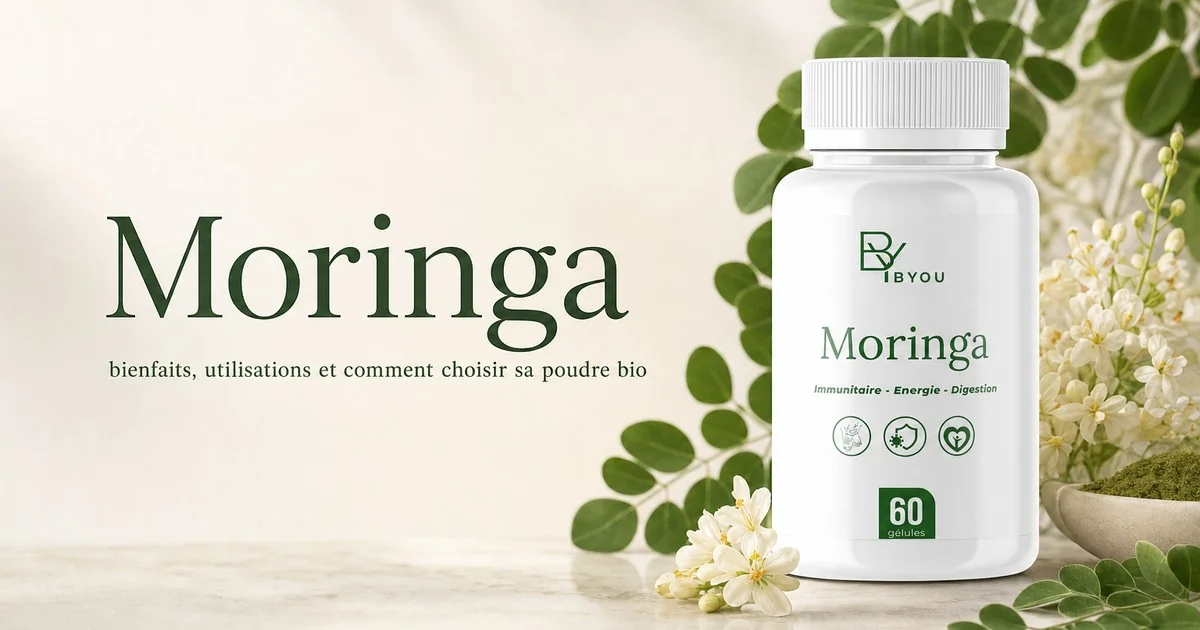
Moringa, also known as the “tree of life” or Moringa oleifera, is a superfood native to India with an exceptionally rich nutritional profile. Its leaves, dried and ground into moringa powder, make a natural food supplement with many virtues, used for thousands of years in traditional medicine. Rich in vitamins, minerals, protein and antioxidants, moringa is winning people over today with its complete nutritional profile and its benefits for vitality.
What exactly is moringa?
Moringa oleifera is a tropical tree of the Moringaceae family. Native to the foothills of the Himalayas, it now grows in many warm regions, notably in Africa and Morocco.
Every part of the tree can be used: leaves, seeds, roots, flowers. But it is the leaves that are richest in nutrients. Once dried and ground, they produce a fine green powder with a slightly vegetal taste.
This powder has a remarkable nutrient density: vitamins A, C and E, calcium, iron, potassium, complete protein with all the essential amino acids, and a family of powerful antioxidants.
- 92nutrients identified
- 46types of antioxidants
- 27%plant protein
- 25%natural fibre
What are the main benefits of moringa?
Moringa naturally supports your everyday vitality. Its nutritional properties make it a valuable ally for several aspects of wellbeing.
Supporting energy and reducing tiredness
Thanks to its iron, B vitamin and protein content, moringa helps maintain a steady energy level. It is an interesting natural alternative for people looking for a boost without stimulants.
Unlike coffee, moringa causes neither a sudden energy spike nor a crash afterwards. Its effect is gradual and lasting.
Rich in antioxidants
Moringa leaves contain polyphenols, flavonoids and vitamin C. These compounds help neutralise free radicals and protect cells from oxidative stress.
This antioxidant action helps maintain radiant skin and a body in better overall shape.
Key point
Moringa contains 7 times more vitamin C than oranges and 4 times more calcium than milk, weight for weight of fresh leaves.
Complete nutrition
For people following a vegetarian or vegan diet, moringa is a valuable source of complete protein and plant-based iron. It naturally complements your nutritional intake.
Its high calcium content also makes it an ally for bone health, while its fibre supports healthy intestinal transit.
Supporting the immune system
The vitamins A and C in moringa contribute to the normal function of the immune system. A regular course can help strengthen your natural defences, especially when the seasons change.
Moringa is not a miracle cure, but a concentrate of plant nutrition that nourishes the body in depth.
How do you use moringa powder every day?
Moringa powder comes in different forms. Capsules are the most practical option for regular intake and precise dosing.
Recommended dosage for capsules
For our moringa capsules, the recommended dosage is 1 to 3 capsules a day, i.e. 500 mg of moringa powder per 3 capsules. Take them after a meal with a glass of water or fruit juice.
A 2- to 3-month course lets you see the optimal benefits. You can then take a one-month break before starting again if needed.
Possible combinations
Moringa pairs well with other natural supplements for an all-round effect. You can combine it with Maca for vitality, Ashwaganda for stress management, or Pure Marine Collagen for beautiful skin.
Practical tip
Start with one capsule a day for the first week to let your body adjust, then gradually increase to 3 capsules according to your needs.
Other ways to use it
If you have loose powder, you can add it to your smoothies, green juices, yoghurts or salads. Half a teaspoon is enough to start with.
Avoid heating the powder to high temperatures to preserve its heat-sensitive nutrients.
How do you choose a high-quality organic moringa powder?
Not all moringa is created equal. Several criteria help you identify a top-quality product.
Geographical origin
Choose moringa grown in its natural environment, without pesticides or chemical fertilisers. Moroccan moringa benefits from an ideal climate and respectful traditional growing methods.
Our moringa is produced in Morocco to rigorous standards, guaranteeing purity and traceability.
Organic certification
Certified organic moringa guarantees the absence of chemical residues and respect for the environment. This certification also ensures that the leaves have been harvested and dried using controlled processes.
Drying method
Low-temperature drying preserves vitamins and enzymes. Drying too quickly or at high temperatures destroys some of the nutrients.
The powder should be a vivid green, a sign that the chlorophyll and nutrients have been well preserved.
Packaging
Plant-based capsules protect the powder from oxidation and moisture. They also make precise dosing and daily intake easier, which is especially practical for busy people.
Check the expiry date: our moringa capsules keep until November 2026 when stored in good conditions.
| Criterion | Quality moringa | Lower-quality moringa |
|---|---|---|
| Colour | Intense bright green | Dull or yellowish green |
| Smell | Fresh and vegetal | Dry hay or no smell |
| Origin | Traceable and certified | Not specified |
| Certification | Certified organic | No certification |
| Packaging | Capsules or opaque pouch | Transparent packaging |
Moringa or spirulina: what's the difference?
These two green superfoods are often compared. Yet they have distinct nutritional profiles.
Spirulina is a micro-alga very rich in protein (60-70%) and iron, but its strong taste isn't to everyone's liking. Moringa, a land plant, offers a more balanced profile with less protein (25-27%) but more vitamins A and C and calcium.
Moringa also contains fibre, which spirulina lacks. Its mild, vegetal taste makes it more versatile in cooking.
For pure vitality, spirulina is more concentrated. For an all-round, balanced nutritional intake, moringa comes out on top. Some people alternate the two in successive courses.
Precautions for use and contraindications
Moringa is generally well tolerated. However, a few precautions are needed for optimal use.
Who can take moringa?
Moringa is suitable for healthy adults looking for a natural nutritional supplement. It is particularly popular with athletes, people who feel tired and those following a plant-based diet.
Situations requiring medical advice
Pregnant or breastfeeding women should consult their doctor before taking it. Moringa may interact with certain medicines, notably anticoagulants and thyroid treatments.
If you are currently undergoing medical treatment, always ask your healthcare professional for advice.
Good to know
Food supplements are no substitute for a varied, balanced diet. A healthy lifestyle remains the foundation of good health.
Storage
Store your moringa capsules in a dry place, away from light and heat. Close the bottle tightly after each use.
Keep the product out of the reach of children.
Moringa as part of a holistic approach to wellbeing
Moringa doesn't work miracles on its own. It fits into an overall approach that includes a balanced diet, adequate hydration, regular physical activity and good-quality sleep.
Think of it as a nutritional boost that complements your good habits. Combined with other adaptogenic plants such as Tongkat Ali or Biophane, it can be part of a personalised wellbeing routine.
Listening to your body remains essential: notice how you feel after a few weeks of the course and adjust the dosage to your needs.
FAQ: your questions about moringa
How long does it take to feel the effects of moringa?
The first effects on energy can appear after 1 to 2 weeks of regular use. For deeper benefits on overall vitality, allow 4 to 6 weeks. A 2- to 3-month course is recommended for optimal results.
Can you take moringa every day?
Yes, moringa can be taken daily, sticking to the recommended dosage of 1 to 3 capsules a day. After a 2- to 3-month course, you can take a one-month break before starting again if needed.
Does moringa help you lose weight?
Moringa is not a slimming product. Its fibre can promote a feeling of fullness and its nutritional content supports metabolism, but it does not directly make you lose weight. It goes hand in hand with a balanced diet as part of a healthy lifestyle.
What is the difference between moringa powder and moringa capsules?
Loose powder is more versatile (to add to drinks and dishes), while capsules guarantee precise dosing, better preservation and convenient, tasteless intake. Both forms contain the same moringa; the choice depends on your preferences.
Is moringa suitable for vegetarians and vegans?
Absolutely. Moringa is 100% plant-based and is even an excellent source of complete protein, iron and calcium for people following a vegetarian or vegan diet. Just check that the capsules are made from plant cellulose.
